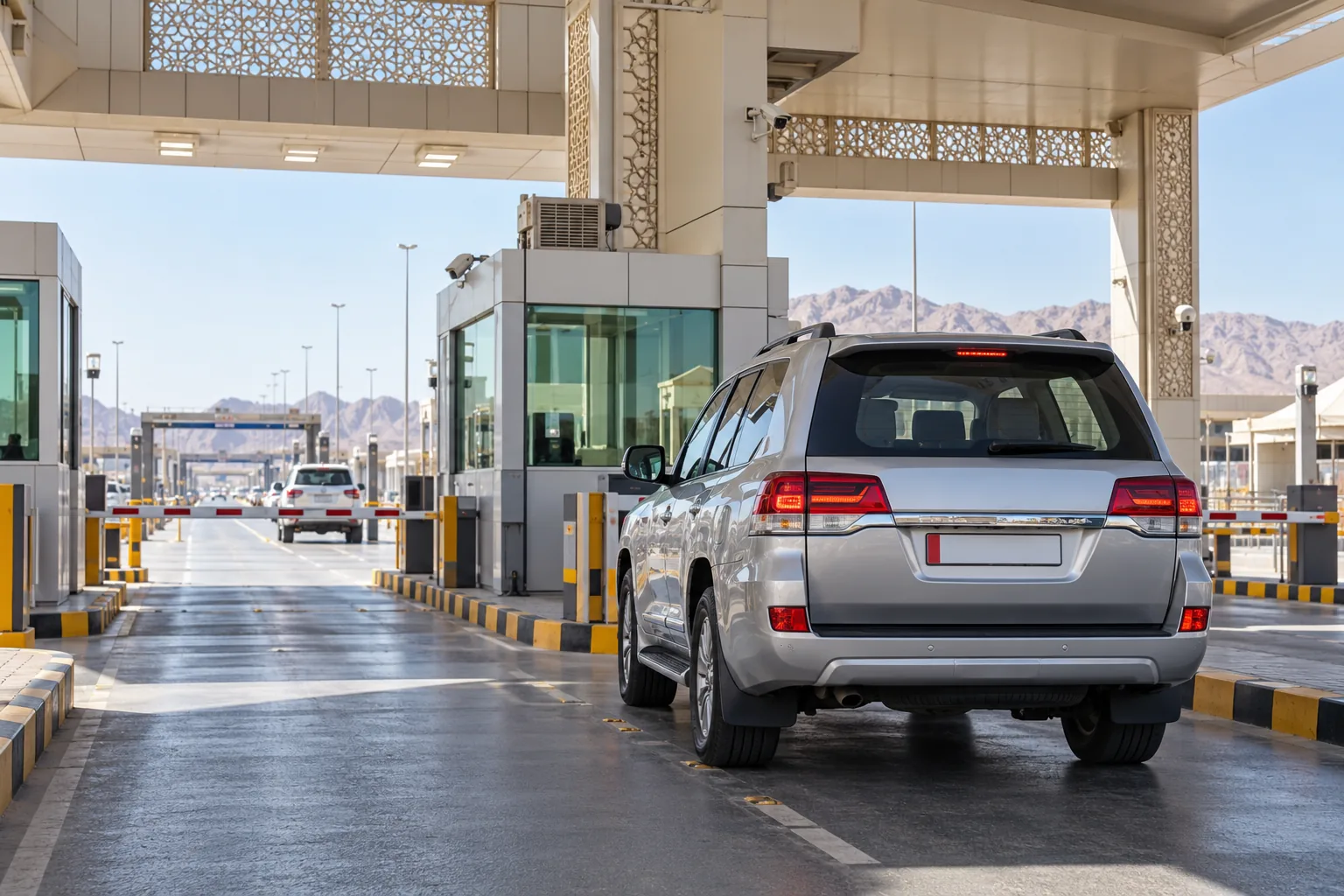
The deadline and the rule it corrects
ZATCA and the Ministry of Interior announced new controls effective from 26 August 2026. Under those controls, a qualifying Gulf-registered vehicle may normally remain in Saudi Arabia for 90 days, continuous or separate, within 365 days calculated from its first entry through a customs point.
For vehicles already inside the Kingdom before the controls took effect, the authorities opened a 90-day correction period beginning 26 August and ending at the close of 23 November 2026. The correction deadline and the normal 90-in-365 stay are related but distinct rules. Record the first customs-entry date and whether the vehicle was present before the effective date.
Who is within the announced measure
The official notice addresses Saudi citizens who own a Gulf-registered vehicle, non-GCC residents in Saudi Arabia who own one, and a person duly authorized to drive a qualifying vehicle. Ownership, authorization and the customs-entry record must support the route chosen.
Do not infer eligibility merely from holding the keys or an informal permission message. If the driver is not the registered owner, obtain the formal authorization and confirm that it is acceptable for the customs and Traffic steps. The treatment of a GCC citizen’s vehicle can follow a different framework, so the non-GCC-resident correction announcement should not be generalized to every Gulf plate.
Choose between exit and Saudi customs clearance
The notice identifies two main correction options. The first is to take the vehicle out of Saudi Arabia before the correction period ends. The second is to complete customs clearance so that Saudi plates can be issued. Decide early because clearance may require documents, an eligible vehicle, valuation, duty and tax, technical compliance and Traffic steps.
Customs clearance is not a promise that every Gulf-registered vehicle can receive Saudi plates. ZATCA’s vehicle-import controls include rules on vehicle age, condition, energy-efficiency requirements, prohibited damage or alterations, ownership evidence and resident import limits. Check the current controls against the exact model and owner before paying a broker or planning around registration.
How the customs-clearance route works
ZATCA says an authorized customs broker may submit the customs declaration through an appropriate nearby customs port. The vehicle does not need to return to the port through which it first entered solely for this correction route. Required customs duty and tax must be paid, but the official notice does not give one universal total for every vehicle.
Use ZATCA’s official customs-broker directory to verify the broker’s licence and operating port. Ask for a written scope, government charges, broker fees and any amount dependent on valuation. Never transfer money to an account that cannot be matched to the licensed business, and keep the declaration, valuation, payment receipt and correspondence.
Prepare a document and eligibility file
Collect the original registration or other proof of ownership, the owner’s Saudi identity or residency record, passport information where required, the customs-entry record, the formal driving authorization if applicable and valid insurance. Check the chassis number across every document and inspect it for inconsistency before a declaration is filed.
For Saudi registration, additional import and technical documents may be required. A resident generally faces specific limits on the type and frequency of vehicle import, and transport vehicles may not qualify under the resident route. Because the rules depend on the vehicle and owner, obtain a case-specific checklist from ZATCA or the licensed broker rather than copying another owner’s file.
Do not assume the 30-day extension is automatic
The 21 August ZATCA notice said a qualifying owner or authorized driver could seek an extension before the normal stay expired, limited to 30 days calculated from the end of the normal period and coordinated with the General Department of Traffic. It also said the request service would be available through Absher.
That announcement is not proof that the service is visible in every account today or that an application will be approved. Check the current Absher service menu and, if the route is unavailable or unclear, contact ZATCA through its official 19993 contact centre before the original deadline. Save the request and response; do not let an unverified extension claim replace an exit or clearance plan.
A practical action plan before 23 November
First, verify the first-entry date and whether the correction window applies. Second, decide whether exit or Saudi registration is realistic. Third, if choosing clearance, test import eligibility and obtain a written broker estimate. Fourth, verify insurance and any Traffic requirements. Finally, complete the chosen route early enough to correct a rejected document.
Do not wait until 23 November to discover that an authorization is invalid or a vehicle is ineligible for import. Keep all official reference numbers. If ownership is disputed, the vehicle is financed, a customs record is missing or the chassis details do not match, stop and obtain guidance from ZATCA, Traffic or a qualified professional before submitting a declaration.