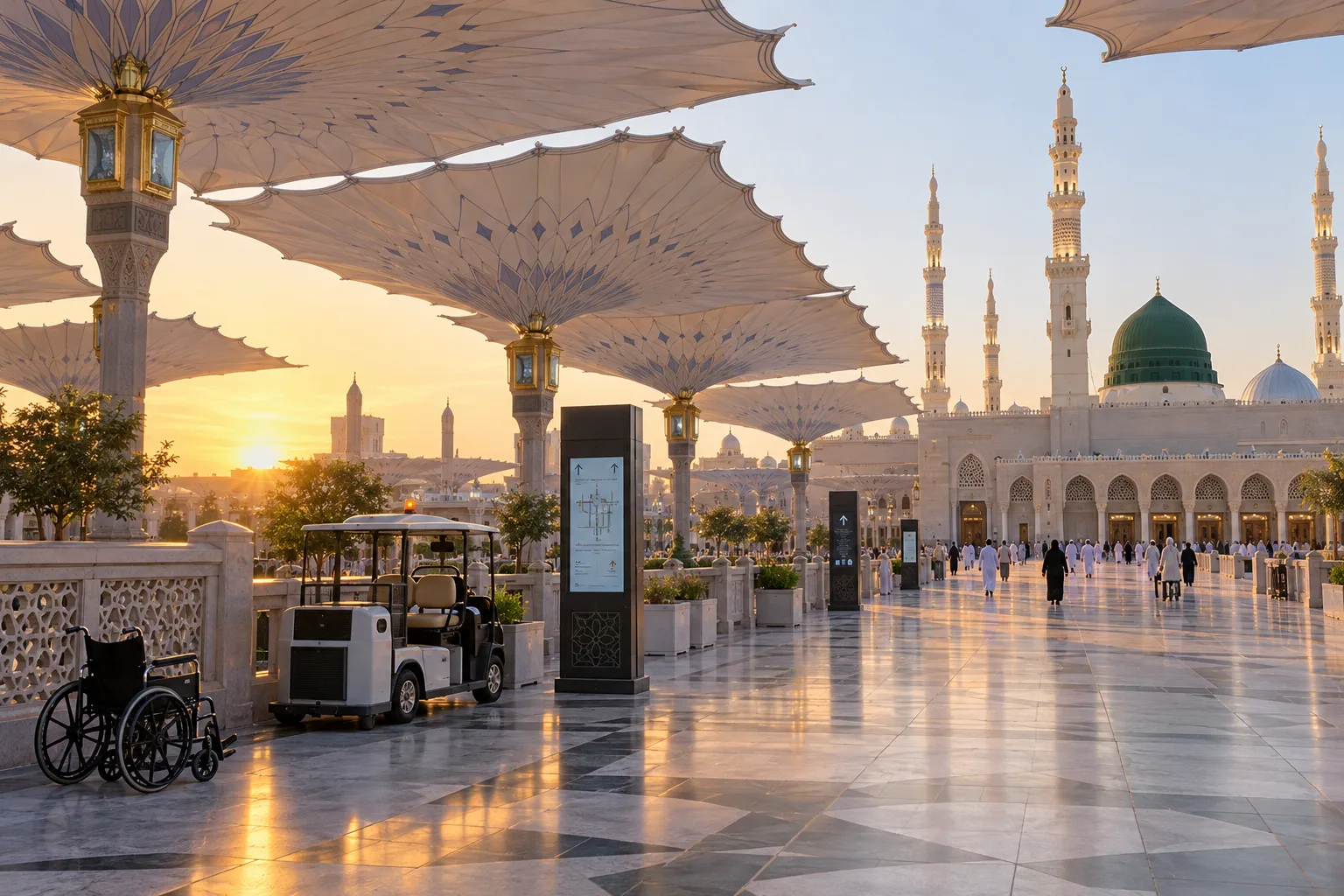
The September figures reported by the authority
The General Authority for the Care of the Affairs of the Grand Mosque and the Prophet’s Mosque reported 21,615,977 visits to the Prophet’s Mosque during September 2026. It also recorded 2,124,421 visitors offering salutations and 1,449,791 Rawdah prayer visits.
Service figures included 355,130 users of wayfinding support, 287,886 users of guest-care centers, 308,261 users of mobile-cart services and 79,599 users of services for older people and people with disabilities. The library received 81,243 visits and exhibitions received 137,867.
What the numbers do and do not measure
The report describes visits and service interactions. It does not state that every count represents a different person, and a visitor may use more than one service. The figures therefore should not be added together or converted into a unique-arrivals estimate.
Monthly totals also do not predict the crowd level at a particular prayer, gate or hour. Residents and visitors should rely on current authority guidance, on-site signs and staff directions when planning movement.
Use the data to identify available support
The practical value of the report is its evidence that wayfinding, guest-care, mobility, accessibility, library and exhibition services are being used at scale. A visitor who may need assistance should review the authority’s current channels before arrival and locate the relevant service point on site.
Keep identification, accommodation details and a companion’s contact information accessible. A wheelchair, cart or assistance need should be confirmed through the current official route; previous availability or another visitor’s experience is not a guaranteed reservation.
- 1
Review current guidance
Check the authority’s official portal before travel for service and access updates.
- 2
Choose a clear meeting plan
Agree on a gate or service point and keep accommodation and companion contacts available.
- 3
Follow staff directions
On-site routing and safety instructions take priority over an old map or social post.
Plan respectfully and avoid unofficial claims
The figures describe service delivery, not permission to obstruct routes, film other worshippers or promote unofficial access services. Preserve privacy and follow the rules of the sacred site.
Do not pay a social-media account that claims it can guarantee Rawdah access, mobility priority or a special crowd-free time. Use the responsible authority and approved platforms for current arrangements.