
Turn the problem into a clear complaint
A disputed charge, an unresolved transfer or a service failure is easier to investigate when the bank can identify the exact event. Before opening a complaint, write the date, amount if relevant, product or account involved, and what went wrong. State the outcome you are asking the bank to consider.
Keep an ordinary service inquiry separate from a formal complaint. If you have only spoken to a general support agent, ask whether a complaint was actually registered and obtain its reference. A chat conversation and a complaint record may not be the same thing.

Prepare a small, relevant evidence file
A practical evidence pack contains the complaint reference, a short timeline, the bank’s reply and the documents needed to identify the disputed event. For a transaction issue, this may include the relevant statement entry or transfer receipt. For a service problem, the useful record may be a request confirmation and the later response.
Name attachments clearly and keep the originals. Explain any difference between a pending entry and a settled charge instead of adding them together as though they were two losses. These are editorial preparation suggestions; the official form determines the fields and supporting documents required for your case.
Use the bank’s complaint route first
Raise the matter through the bank’s official complaint channel and save the submission date. The current SAMA complaints framework separates an initial Level One response from Level Two escalation by the customer. When you receive a reply, check whether it addresses the disputed event and the action you requested.
If you disagree, explain the unanswered point and use the escalation mechanism offered for that complaint. Repeatedly opening unrelated tickets can make the sequence harder to follow. Keep the original reference visible in later correspondence unless the official service instructs you otherwise.
Understand what the current timeframes mean
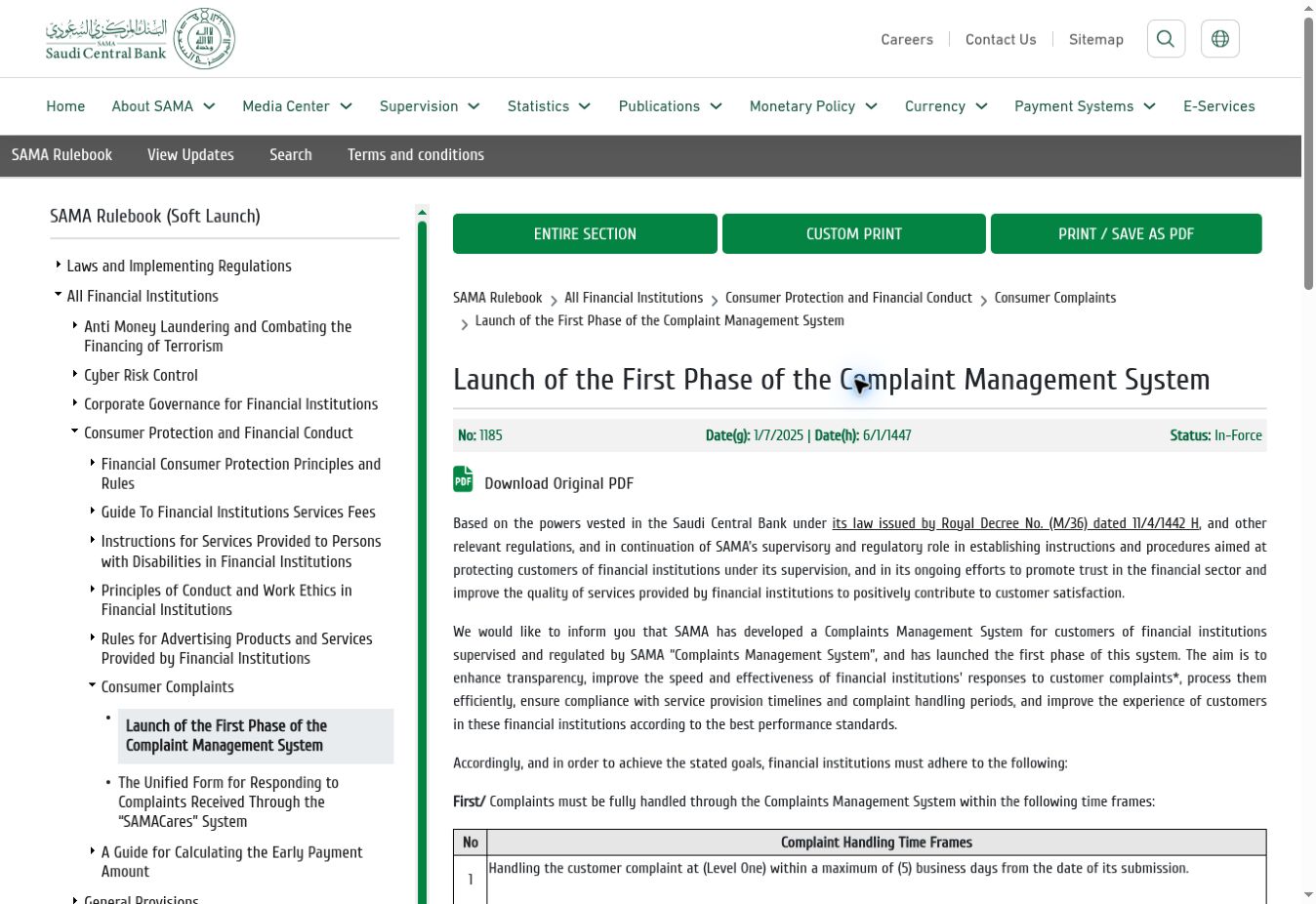
SAMA’s in-force July 2025 circular sets a maximum of five business days for Level One handling and three business days for Level Two handling after customer escalation. It separately gives the institution two business days to answer a SAMA request on a complaint accepted for escalation. The circular supersedes conflicting earlier instructions.
These are different stages, not three promises that can simply be added into a guaranteed final-resolution date. Record when each stage actually began and check the status shown in the service. A response deadline also does not establish that the bank must accept your requested remedy.
Submit through SAMA’s official service
SAMA’s public service covers complaints against supervised banks, finance companies, payment companies and money changers. Open Filing a Complaint Against Financial Institutions from its official website, use Start service, authenticate through Nafath, complete the complaint fields and attach the relevant supporting documents.
Choose the institution and issue that match the evidence. Explain the earlier bank complaint and why the response remains disputed. Review dates, amounts and attachments before submitting, then keep the new reference so you can follow this stage without confusing it with the bank’s original ticket.
Follow requests and read the outcome
SAMA’s current contact guidance directs customers to its electronic service for submitting or following complaints and lists its consumer contact centre for inquiries. Use the reference associated with the matter you are following. If additional documents are requested, answer through the official case channel and keep a copy of what you sent.
When a case is closed, compare the stated outcome with the actual account event. Was a transaction corrected, a fee reversed, or an explanation supplied? If a specific point remains unanswered, describe it precisely through the available review route. A closed status by itself does not describe which remedy was delivered.
Protect the account while seeking help
Use official service links and keep login credentials, card security details and authentication codes private. A legitimate complaint can be described using references and relevant evidence without publishing a full statement online. If the matter involves an immediate account-security concern, contact the bank through its official urgent-support route while preserving the complaint trail.