Changing employers without an NOC: how the electronic notification system works
Under historic labour reforms codified in Qatar Law No. 21 of 2015 and subsequent ministerial decrees, expatriate workers in Qatar are no longer required to obtain a No Objection Certificate (NOC) or release letter from their current employer to switch jobs.
The job transfer process is completed entirely through the Ministry of Labour (MOL) electronic notification portal using your Qatar ID (QID) and linked mobile number. Once you sign an employment offer with a new company, submit the official 'Change Employer' request online. The Ministry's system generates an Employer Change (EC) tracking number and automatically notifies your current employer electronically.
Neither party can arbitrarily block the transfer as long as statutory notice periods are observed and the new employer holds an approved recruitment quota.
Statutory notice periods: 1 month vs 2 months and probation rules
While an employer's permission is not needed, you must observe statutory notice periods before starting work with the new establishment:
1. Two years or less of service: You must provide exactly one month's written notice to your employer.
2. More than two years of service: You must provide two months' written notice.
3. During probation period: If you resign during your contractual probation (which cannot exceed six months), you must give at least one month's notice, and your new employer must reimburse your current sponsor for documented recruitment and visa costs (up to two months of your basic wage).
If you stop working before the notice period concludes without mutual agreement, you are legally required to compensate your employer with an amount equal to your basic wage for the unserved period.
Accessing the Unified Platform for Complaints and Whistleblowers
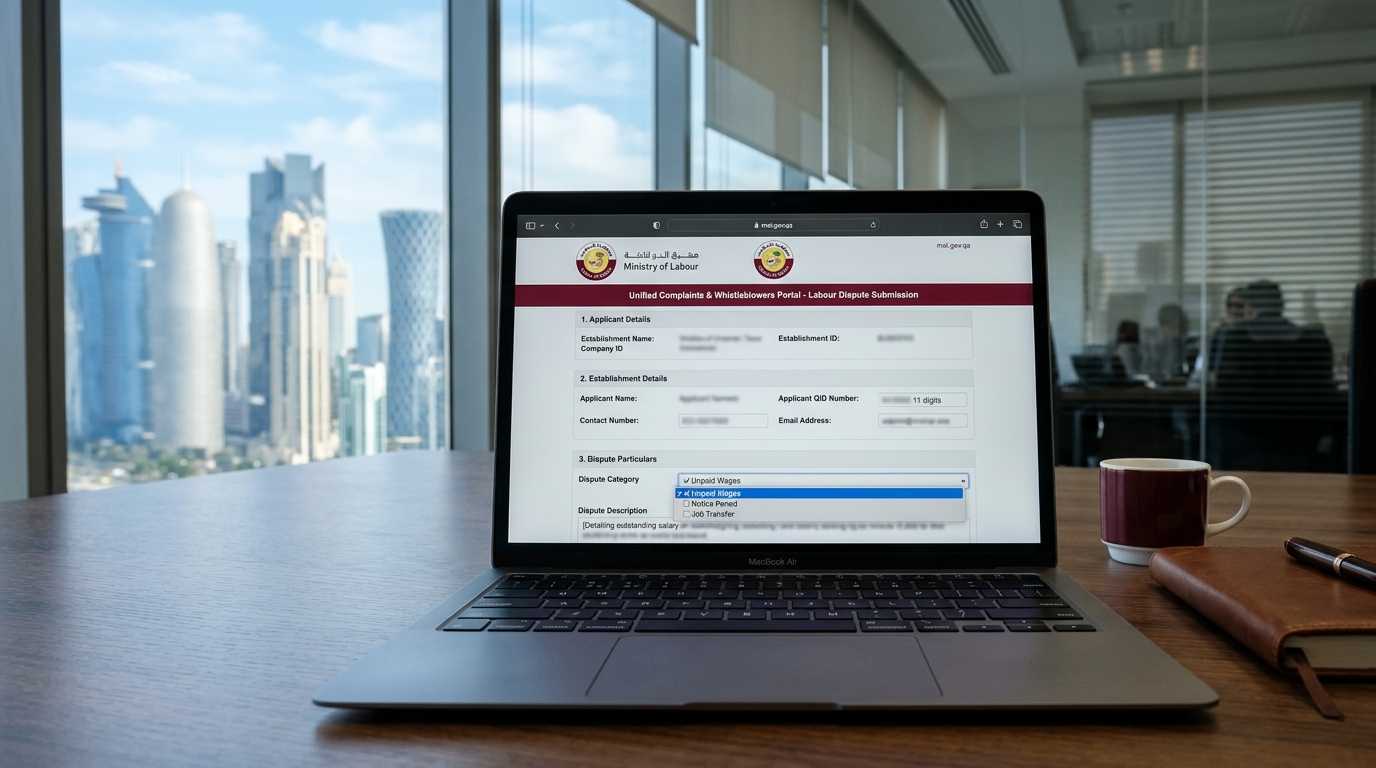
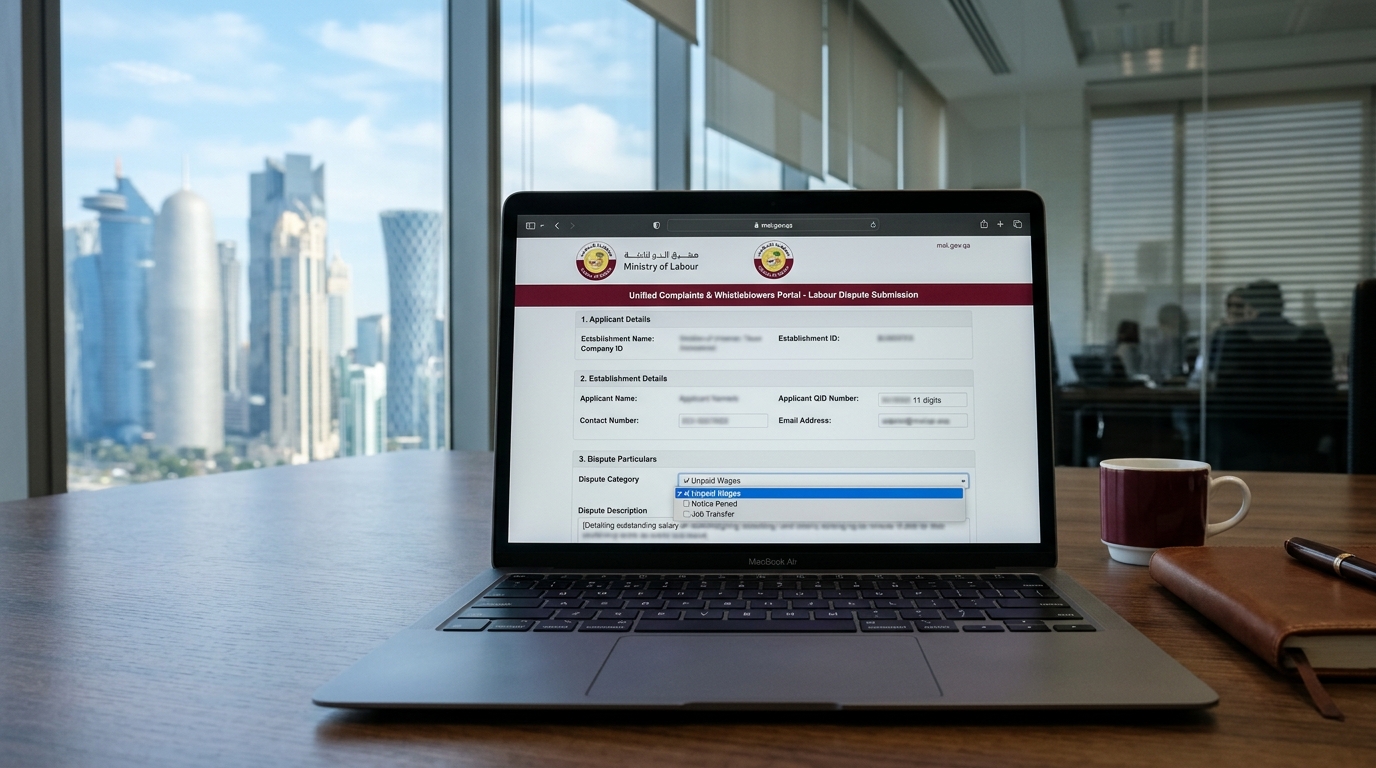
If your employer delays your salary, withholds end-of-service gratuity, refuses to settle leave pay, or retaliates after you request a job transfer, you have the statutory right to file a dispute through the Ministry of Labour Unified Platform for Complaints and Whistleblowers (mol.gov.qa).
The platform accepts complaints from private-sector workers governed by the Labour Law as well as domestic workers. You can sign in using your QID number, smartcard, or the National Authentication System (Tawtheeq). You can also report violations anonymously through the whistleblowing channel.
Step-by-step procedure to submit a labour dispute online
Follow these steps to file a formal dispute with the Ministry of Labour:
- 1
Log into the MOL Unified Platform
Visit mol.gov.qa, open the Unified Platform for Complaints and Whistleblowers, and authenticate using your QID and mobile verification code.
- 2
Select the dispute category and enter establishment details
Choose whether your claim relates to unpaid wages, delayed end-of-service benefits, arbitrary contract termination, or transfer obstruction, and input your employer's Establishment ID or commercial registration (CR) number.
- 3
Upload supporting documentary evidence
Attach your employment contract, bank statements showing salary history, WhatsApp/email records, and any official notice letters.
- 4
Track the complaint reference and attend mediation
Save your complaint tracking number. The Ministry's Labour Relations Department will schedule an amicable mediation session with the employer within seven to ten days.
Labour Dispute Settlement Committees: mediation, enforceable rulings and appeals
When a dispute is lodged, the Labour Relations Department conducts an amicable settlement mediation. If the employer fails to appear or refuses to pay legitimate dues, the Labour Law mandates that the dispute must be referred to the Labour Dispute Settlement Committee within a maximum of three weeks.
Headed by a judge from the Court of First Instance, the Settlement Committee holds formal hearings and issues legally binding, enforceable rulings with the power of executive writs. Workers are completely exempt from judicial and filing fees on all claims. Either party can appeal the Committee's ruling before the Court of Appeal within 15 days of notification.
Protections against retaliatory absconding cases and illegal QID cancellation
Expatriates often worry that an employer will retaliate by filing a false runaway (absconding) report or cancelling their QID once a dispute or transfer is initiated.
Under Ministry of Labour regulations, once you have an active job transfer request (EC number) or an open complaint on the Unified Platform, any retaliatory absconding complaint filed by the employer is automatically frozen and investigated. Furthermore, employers cannot cancel a worker's QID while a labour dispute is pending before the Ministry or the Settlement Committee.
For urgent assistance, you can also contact the Ministry of Labour hotline at 16008 or email info@mol.gov.qa.