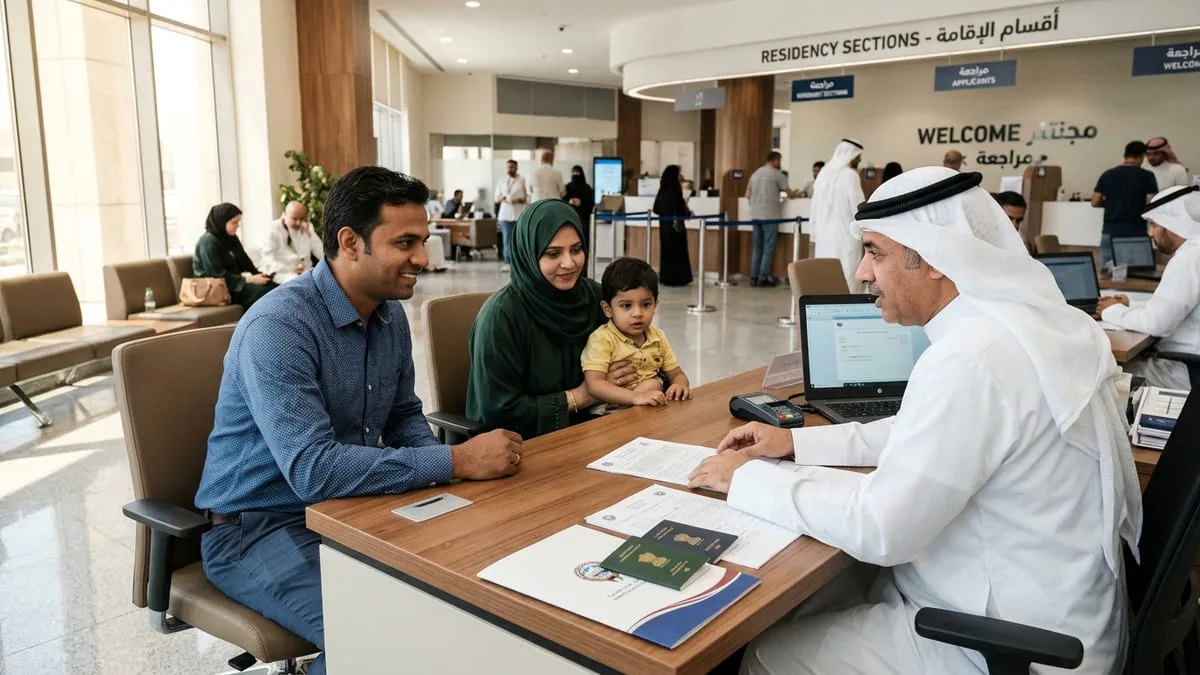
Step-by-step procedure: Applying for a family visit visa on Sahel
Sponsors can lodge an electronic family visit visa application through the Sahel app by completing these steps:
- 1
Step 1: Authenticate Digital ID on Sahel
Launch the Sahel app on your smartphone, log in using your Kuwait Mobile ID digital authentication, and verify active residency status.
- 2
Step 2: Select Ministry of Interior Residency Services
Navigate to 'Services' > 'Ministry of Interior' > 'Residency Affairs Department' and select 'Family Visit Visa Application'.
- 3
Step 3: Input Visitor Data and Upload Documents
Enter visitor passport information, select family relationship degree, and upload clear PDF copies of passports, attested marriage/birth certificates, and return tickets.
- 4
Step 4: Sign Digital Declaration and Pay Processing Fee
Electronically sign the mandatory pledge confirming the visitor will not overstay or work, settle the 3 KD fee via K-Net, and receive the digital electronic visa.
Ensure that your relationship documentation (marriage certificate or birth certificates) is officially attested by your home country foreign ministry and the Kuwait Embassy prior to upload.
Differentiating between visit visa deregulation and Article 22 residency
Expatriates living in Kuwait frequently encounter confusion regarding recent Ministry of Interior (MOI) circulars. Under directives modernizing entry procedures, the Kuwait government scrapped the rigid 400 KD and 800 KD salary barriers for Family Visit Visas.
Expatriates can now sponsor spouses, children, parents, and direct relatives for temporary visits without presenting high-salary bank endorsements, provided standard accommodation and round-trip national carrier flight bookings are verified.
However, this deregulation does not apply to permanent family relocation. Expatriates seeking to sponsor family members for long-term residency under Article 22 must still satisfy the strict 800 KD monthly salary floor listed on their official Public Authority for Manpower (PAM) work permit.
The comparison table below details the legal boundaries, financial requirements, and permissible stays between both tracks.
Under updated executive regulations, expatriates sponsoring relatives on family visit visas must sign an electronic undertaking acknowledging full responsibility for the visitor's medical treatment in private healthcare facilities during their stay. Public clinics in Kuwait do not admit visit visa holders except in life-threatening emergencies.
| Feature / Requirement | Family Visit Visa (Temporary) | Article 22 Family Joining (Permanent Iqama) |
|---|---|---|
| Minimum Salary Requirement | No salary minimum (Abolished) | 800 KD / month strictly required on PAM work permit |
| Degree / Profession Exemptions | Applies universally to all valid residents | Exemptions for doctors, engineers, professors, judges |
| Permissible Stay Window | 30 to 90 days (Strictly non-extendable) | Co-terminus with sponsor's Article 18 residency (1–3 years) |
| Health Insurance Requirement | Mandatory tourist/visitor health policy | Annual government health insurance fee (50 KD per dependent) |
| Application Portal | Sahel app / Kuwait Visa digital platform | Sahel app & Residency Affairs Department appointment |
Strict non-conversion policies and heavy overstay penalties
The Ministry of Interior enforces a zero-tolerance policy regarding visit visa overstays. Family visit visas cannot be transferred or converted into an employment (Article 18) or residence (Article 22) permit while inside Kuwait.
If a visitor overstays the designated permit period, an automated daily fine of 10 KD per day is levied. Additionally, the expatriate sponsor faces an administrative block on all future visa sponsorships on their civil file.
Sponsors are also legally bound to ensure visitors depart exclusively aboard designated national carriers (Kuwait Airways or Jazeera Airways) as specified during the application pledge.
Visitors must also comply with national accommodation and movement regulations. Exceeding the permitted stay period results in an automatic alert transmitted to security checkpoints, triggering blacklisting on the GCC-wide unified immigration database.