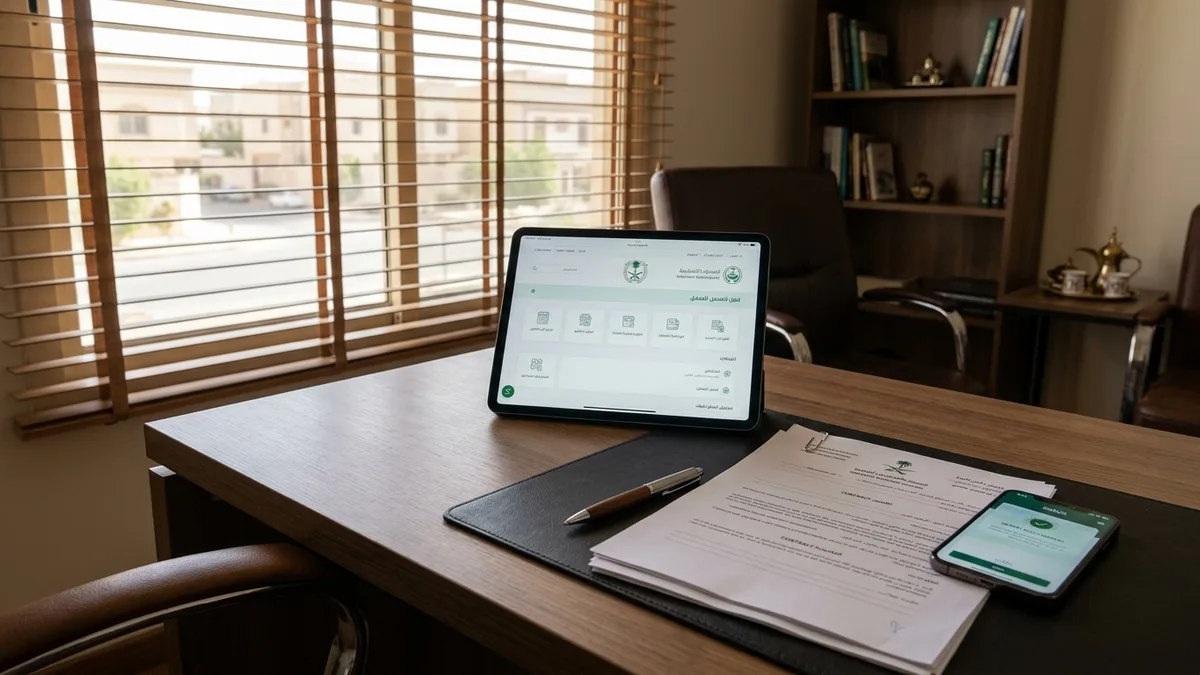
Step-by-step transfer workflow on Musaned
Follow this sequential procedure to execute an individual-to-individual domestic worker transfer:
- 1
Step 1: Current sponsor initiates request on Musaned
Log into Musaned (musaned.com.sa) using National Single Sign-On (Nafath). Navigate to 'Contract Services' and select 'Transfer Services from Individual to Individual'. Select the domestic worker from your list, enter the new sponsor’s National ID / Iqama number and date of birth, and submit the proposal.
- 2
- 3
- 4
Step 4: Pay the Jawazat government transfer fee via SADAD
The new employer accesses their online banking application, selects SADAD / Government Payments, chooses 'Alien Control' or 'Passports (Jawazat)', selects 'Transfer of Sponsorship', and enters the worker’s Iqama number to pay the statutory fee (SAR 2,000 for 1st transfer, SAR 4,000 for 2nd, SAR 6,000 for 3rd).
- 5
The digitized Musaned domestic worker transfer system
The Ministry of Human Resources and Social Development (MHRSD) has centralized all domestic labor transfers (*Naql Khadamat*) through the Musaned platform (`musaned.com.sa`).
Paper sponsorship forms, manual physical letters, and visits to the General Directorate of Passports (Jawazat) have been eliminated. Whether transferring a private driver, housemaid, home nurse, or cook, the entire transaction is verified electronically through interconnected databases between Musaned, Absher, and SADAD.
Mandatory conditions for the employer, new sponsor, and worker
Before initiating a transfer request on Musaned, all three parties must meet strict statutory prerequisites:
Current Employer: Must possess an active Musaned account, have no active labor court disputes or pending complaints, and must demonstrate a clean Wage Protection record showing that the worker’s monthly salaries have been disbursed electronically via approved digital wallets or bank accounts.
Domestic Worker: Must hold a valid residency card (Iqama) with at least 15 days of validity remaining, possess an active Absher account, and must have no active traffic violations or absconding (*Horoob*) reports registered against their civil record.
New Employer: Must have verified Absher and Musaned profiles, pass the automated financial capability check (salary certificate or bank statement), and have sufficient quota availability under household labor rules.
Household domestic worker limits and surcharge rules
Saudi regulations enforce strict caps on the number of domestic workers a private household may sponsor without paying financial penalties:
Saudi Citizen Families: Permitted to sponsor up to 4 domestic workers without paying additional annual fees.
Expatriate Resident Families: Permitted to sponsor up to 2 domestic workers (for example, 1 family driver and 1 housemaid) without additional surcharges.
If a household wishes to sponsor an additional worker beyond these thresholds, an annual government surcharge of SAR 9,600 per extra worker must be settled prior to approval, unless granted an official medical exemption for home care.
Understanding the fees: platform charge vs statutory Jawazat fee
There is frequent confusion regarding the cost of transferring domestic workers. The transaction involves two distinct payments:
1. Musaned System Service Fee: Approximately SAR 100 (plus 15% VAT), paid directly on the Musaned website by the receiving sponsor for digital contract verification.
2. Jawazat Statutory Transfer Fee: Paid via bank SADAD to the Ministry of Interior. The rates are fixed by Saudi law: SAR 2,000 for the first transfer of the worker's career, SAR 4,000 for the second transfer, and SAR 6,000 for the third and any subsequent transfers.
Transferring from a recruitment company to an individual
Individuals in Saudi Arabia can also use Musaned to transfer a worker who is currently under the corporate sponsorship of a licensed recruitment or manpower company directly into their personal household.
In this workflow, the recruitment company initiates the transfer through its corporate Musaned Business account, setting the agreed release fee. Once the individual sponsor accepts and settles the contract dues, the worker is officially transferred to household sponsorship.