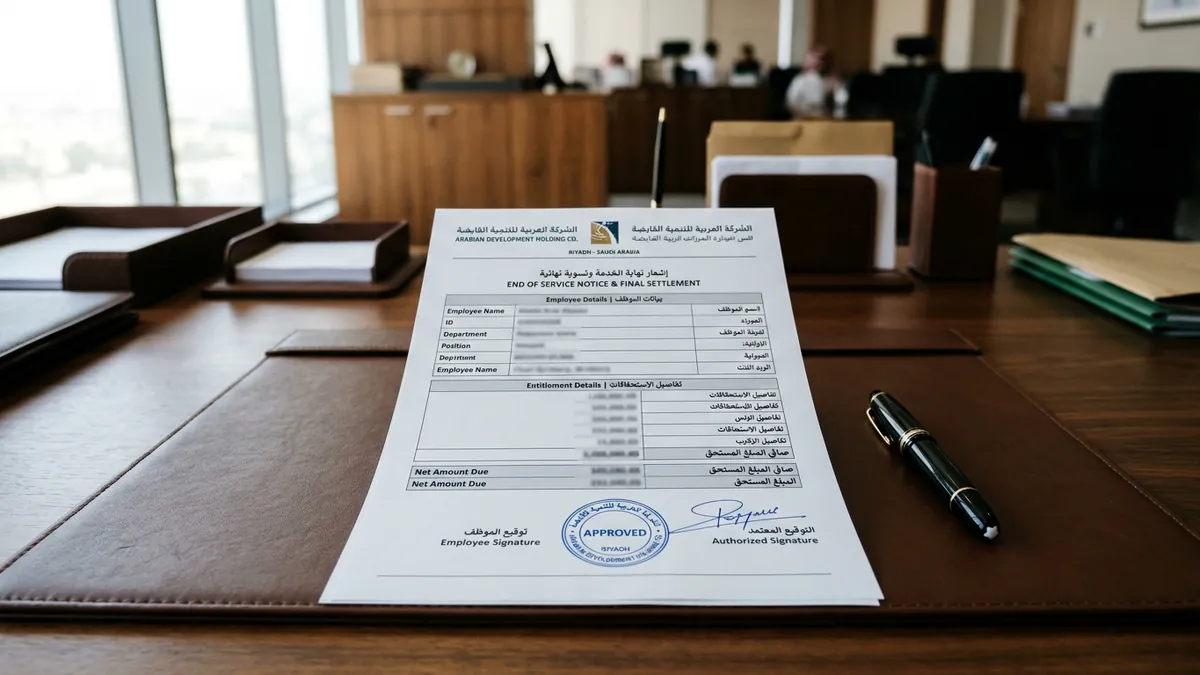
How to calculate and reconcile your final settlement line by line
Ask the employer for a written final settlement statement before signing any clearance or full-and-final discharge form. Work through these four components in order:
- 1
Step 1: Unpaid salary and allowances up to the last working day
Confirm that all earned basic salary, housing, transport and agreed allowances through the end of the notice period are included and match your documented Qiwa contract.
- 2
Step 2: Unused annual leave payout (Articles 109–111)
Under the Saudi Labour Law, an employee is entitled to wage payment for accrued annual leave days not taken before employment ends, calculated against actual wage.
- 3
Step 3: Statutory End-of-Service Benefit (EOSB)
Verify the service dates, total last wage basis, and whether the calculation reflects contract expiry, employer termination, or resignation under Saudi Labour Law Articles 84 and 85.
- 4
Step 4: Return tickets and non-deductible employer fees
Check repatriation ticket obligations and ensure the employer has not deducted recruitment, work-permit or Iqama fees that HRSD rules assign to the employer.
Step 1: Preserve your contract and payroll evidence immediately
When an employment relationship ends in Saudi Arabia—whether by contract expiry, employer termination or resignation—your first priority is to save copies of every official record before your workplace email or internal HR portal access is closed.
Sign in to your personal Qiwa account (qiwa.sa) and download your documented electronic employment contract, along with an official Qiwa experience or salary certificate. Save your last six to twelve months of bank statements showing Wage Protection System (Mudad) salary transfers, your annual leave balance records, and the exact written termination notice.
Step 2: Check how the termination is recorded in Qiwa
The reason and notice period entered in Qiwa affect your final entitlements and transfer options. Open Employment Contracts in Qiwa to verify who initiated the termination, which Saudi Labour Law article or contract clause was cited, and when the notice period ends.
If an employer asks you to submit a resignation in Qiwa when the employer actually initiated the dismissal, pause before accepting. Submitting a resignation can reduce a statutory End-of-Service Benefit (EOSB) calculation compared with an employer-initiated termination.
Step 4: Choose your transfer or Final Exit route on time
Once an employment contract terminates in Qiwa, a limited post-termination window applies to your residency status. Check your Iqama expiry date in Absher and decide whether you are transferring to a new private-sector employer through Qiwa or departing Saudi Arabia on a Final Exit visa.
If you have an offer from a new establishment, the receiving employer initiates an Employee Transfer request in Qiwa for you to accept. Keep your Absher and Nafath access active throughout the transition, and never let your Iqama or mobile number lapse while a transfer or final settlement is pending.
Step 5: What to do if final pay is delayed or disputed
Do not sign a receipt stating that you have received all dues until the money is actually credited to your bank account. If you sign a partial receipt, write clearly which amount was received and which items remain unpaid.
If the employer delays final wages, withholds end-of-service pay, or blocks your lawful exit or transfer, file a formal application through HRSD’s Friendly Settlement for Labor Disputes service (or use the documented wage-contract enforcement route through Najiz where eligible) and attach your Qiwa contract, termination notice and bank statements.