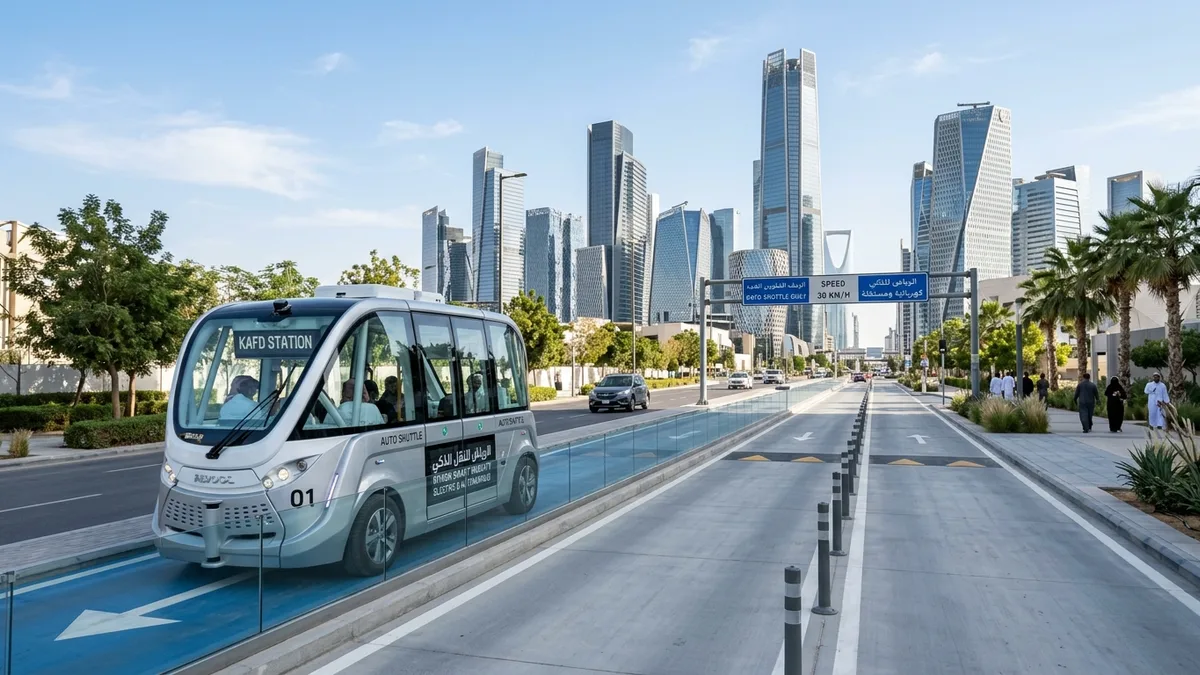
The Transport General Authority executive framework for autonomous transport
Published in the official gazette *Umm Al-Qura*, the Transport General Authority (TGA) approved comprehensive executive regulations governing passenger transport using autonomous (self-driving) vehicles.
The regulatory framework officially becomes enforceable on 6 January 2027. The rules establish Saudi Arabia as a pioneer in intelligent mobility, positioning autonomous robotaxis and smart electric shuttles as permanent fixtures of public urban transit in Riyadh, NEOM, and Jeddah.
Commercial licensing and minimum fleet conditions
Corporate entities seeking to operate commercial driverless passenger services must fulfill stringent operational criteria:
1. TGA Commercial License: Operators must secure an official license valid for up to 3 renewable years, backed by a Commercial Registration specifying autonomous passenger transport activities.
2. Minimum Fleet Size: Licensees must operate a minimum fleet of at least 5 autonomous vehicles, either fully owned or secured through approved institutional leasing.
3. Operating Age Ceiling: Vehicles cannot exceed 10 years of operational age calculated from their year of manufacture.
4. Wasl Platform Integration: All autonomous vehicles must maintain continuous real-time data telemetry linked directly to the TGA’s Wasl platform.
Safety officer requirements vs fully driverless operations
The TGA regulations define flexible operating tiers based on system maturity:
Standard Operations: A trained safety officer must be present—either seated in the vehicle or operating via an authorized remote operations center—capable of overriding automated controls during emergency situations.
Fully Driverless Certification: Operators can apply for an exemption to operate vehicles completely without an onboard human operator once the platform passes advanced technical risk assessments, fail-safe redundancy testing, and real-world trials.
Passenger rights, electronic booking, and insurance
Autonomous passenger services must operate exclusively through licensed electronic booking applications displaying transparent pricing before trip confirmation.
All vehicles must carry comprehensive commercial passenger liability insurance, maintain active interior audio-visual communication systems connecting passengers to emergency command centers, and provide accessible accommodations for passengers with disabilities.
Current trial routes and future rollout in Riyadh
Ahead of the January 2027 enforcement, Saudi Arabia has completed active pilot trials across key urban zones in Riyadh, including connections around Princess Nourah bint Abdulrahman University and the King Abdullah Financial District (KAFD).
Commercial taxi operators and ride-hailing networks are currently testing integrated booking protocols to integrate robotaxis into regular city transport.