Step-by-step procedure: Filing a labor dispute on MHRSD and escalating to Najiz
Expatriate workers can file a labor complaint directly using their National Unified Access (Nafath) credentials without paying legal filing fees:
- 1
Step 1: File the Dispute Online via MHRSD Electronic Labor Services
Log into labore.hrsd.gov.sa using your Nafath ID, select "Labor Relations Services" > "Friendly Settlement", input your employer’s commercial establishment number, and itemize your claims (unpaid wages, EOSB gratuity, airfare, or wrongful termination compensation).
- 2
Step 2: Attach Documentary Evidence from Qiwa and GOSI
Upload your authenticated Qiwa electronic employment contract, GOSI wage contribution printout, and bank statements showing delayed salary transfers.
- 3
Step 3: Attend the Remote Mediation Session (Virtual Hearing)
Both parties receive an SMS with the session date and Microsoft Teams / internal portal video link. Present your documentary evidence to the MHRSD reconciliation officer.
- 4
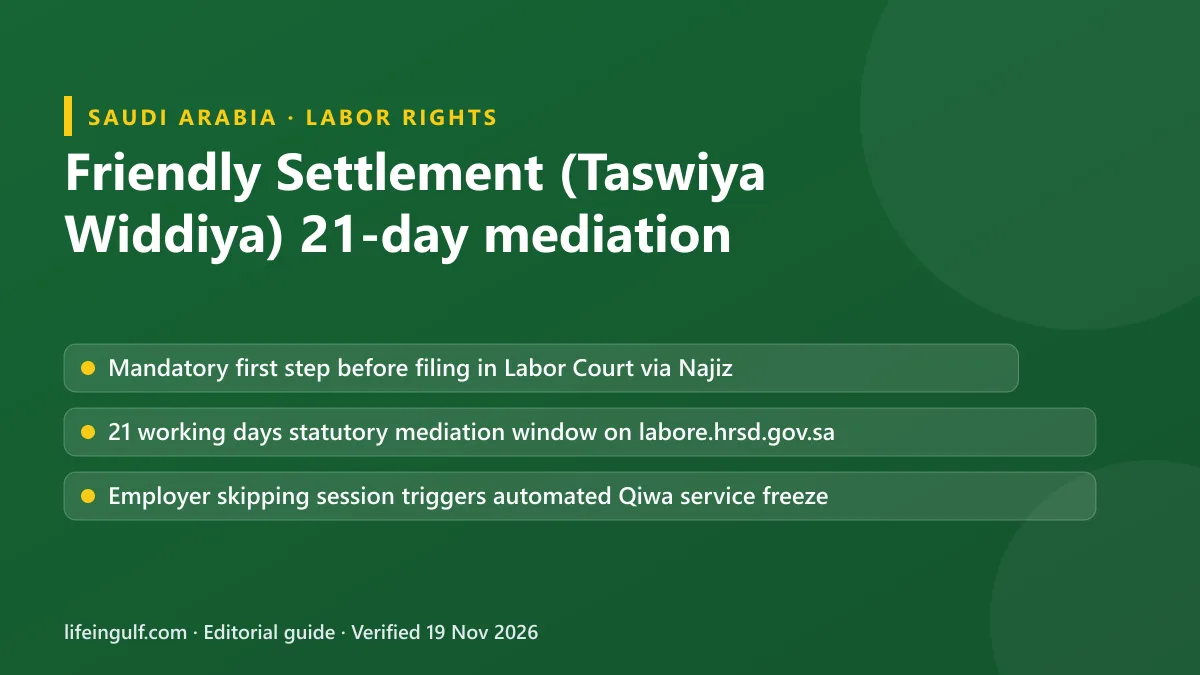
How Saudi Arabia’s mandatory Friendly Settlement (Taswiya Widdiya) works
Quick Answer: Under regulations established by the Ministry of Human Resources and Social Development (MHRSD) ([hrsd.gov.sa](https://hrsd.gov.sa/)) and the Saudi Labor Law, no worker or employer may submit a lawsuit directly to the judiciary. Every employment dispute must first be lodged online through the **Friendly Settlement (*Taswiya Widdiya* / *Wedy*)** platform.
The Friendly Settlement department acts as an official administrative mediation forum. A certified labor mediator conducts electronic or in-person reconciliation hearings between the employee and the employer’s authorized legal representative to achieve a binding voluntary settlement.
If an amicable agreement is signed, it is authenticated as an **Executive Instrument (*Sanad Tanfeedhi*), meaning any breach can be enforced immediately through the Najiz Enforcement Court without further trials. If no agreement is reached within the statutory 21 working days**, the dispute transitions directly into the judicial court system.
| Dispute Stage / Phase | Governing Authority & Portal | Statutory Timeline & Attendance Rule | Legal Binding Nature & System Consequence |
|---|---|---|---|
| Phase 1: Friendly Settlement (Taswiya Widdiya) | MHRSD Portal (labore.hrsd.gov.sa) / Unified Labor System | 21 working days maximum from the date of the first scheduled mediation session. | Voluntary mediation; if employer skips session, establishment Qiwa work services are frozen. |
| Amicable Settlement Agreement (If Settled) | MHRSD & Taradhi Reconciliation Platform | Immediate upon mutual digital signature via Nafath. | Becomes an Executive Instrument (Sanad Tanfeedhi) enforceable via Najiz Enforcement. |
| Phase 2: Labor Court Lawsuit (If Unresolved) | Ministry of Justice — Najiz Portal (najiz.sa) | Electronically referred within 24 hours of Taswiya closure. | Binding judicial litigation; court issues enforceable judgment with appeal rights. |
Establishment service freezes and employee sponsorship transfer rights
To prevent employers from ignoring workers’ claims, MHRSD enforces automated electronic penalties: if an employer fails to attend the scheduled Friendly Settlement mediation session without an accepted statutory excuse, MHRSD automatically freezes the establishment’s Qiwa account, blocking the company from renewing work permits or hiring new staff.
Furthermore, under updated MHRSD transfer rules, if a labor dispute regarding delayed wages or contract breach remains unresolved due to employer non-attendance, the employee has the legal right to apply for a sponsorship transfer on Qiwa without employer consent while the legal claims are pursued in court.